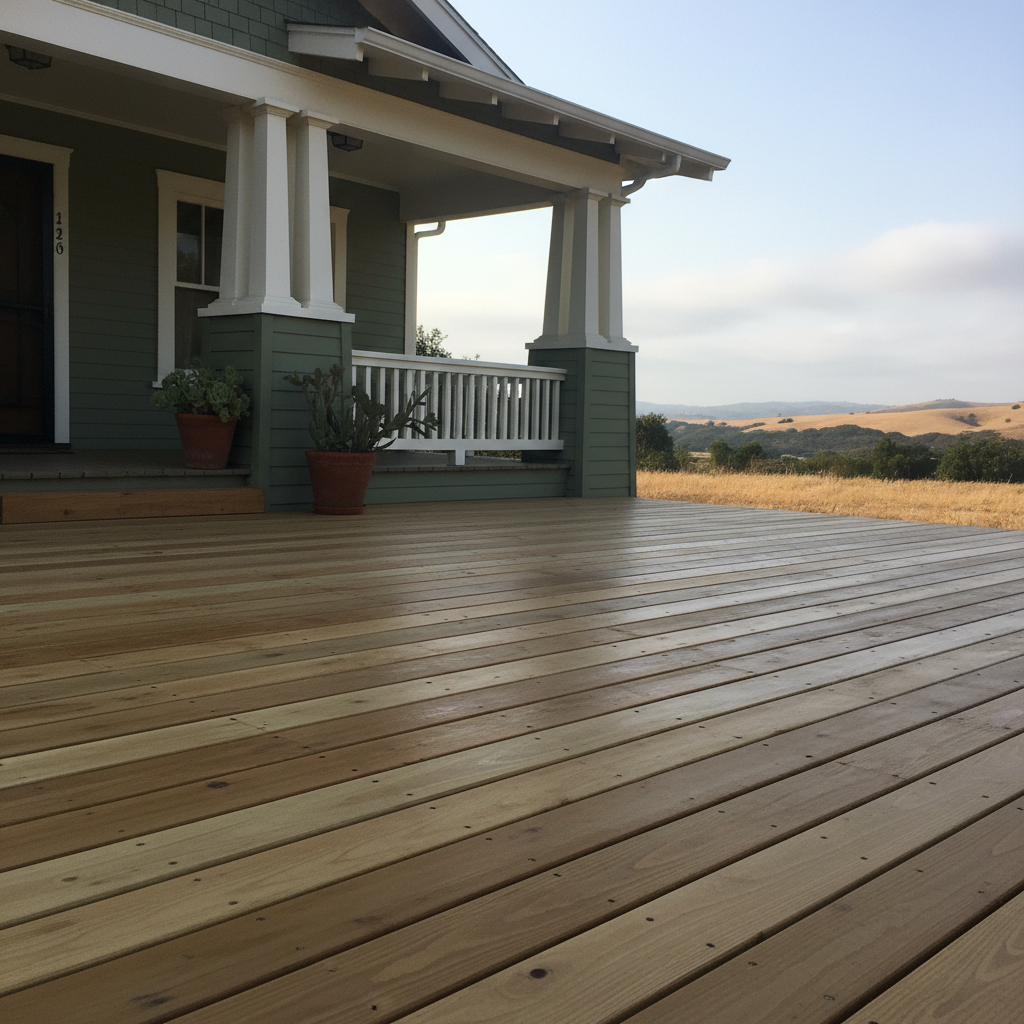
A deck is one of the few things a contractor builds that your family stands on, twenty feet in the air, over a barbecue. That sounds dramatic until you learn that most deck failures aren't dramatic at all. They're a ledger board that was never flashed, a footing that was poured six inches too shallow, or lag bolts where there should have been through-bolts with washers. Nobody notices until the deck starts to sag at one corner, or worse, pulls away from the house during a party. Choosing who builds it matters more than most of the decisions you'll make on the project.
Start with the license, not the portfolio
Anyone can post nice photos. In California, deck construction generally falls under a B (General Building) contractor license through the CSLB, and you can look up any contractor's license number on the state's website in about thirty seconds. Check that it's active, check the bond amount, and check for complaints. If someone hesitates to give you a license number, that's the end of the conversation, not a yellow flag to work through.
Ask about workers' comp insurance too, separate from general liability. A framing crew works with saws, nail guns, and ladders. If someone falls off your half-built deck and the company has no comp coverage, the claim can land on your homeowner's policy.
What's actually under the deck matters more than what's on top
Everyone wants to talk about composite boards and railing styles. Fine, that's the part you'll look at every day. But the part that keeps people safe is underneath, and it's the part a bad contractor rushes.
Roseville sits on clay-heavy valley soil, and a lot of it is expansive clay that swells when it's wet and shrinks hard when it dries out over our long summers. A footing poured to the old rule-of-thumb 12 inches might sit entirely inside that active zone, which means it moves with the soil instead of past it. A builder who knows the ground here digs footings deeper, usually 18 to 24 inches depending on the soil report and the deck's load, and gets below where the clay is doing its seasonal heaving. Ask how deep they're planning to dig and why. If the answer is a shrug, keep looking.
The ledger board, the piece bolted to your house that the whole deck hangs from, is where most structural failures start. It needs to be lag-bolted or through-bolted into the rim joist, not just nailed, and it needs proper flashing so water doesn't sit behind it and rot the house framing for years before anyone notices. This is a five-minute detail to explain and an afternoon to get right, and it's the single thing I'd ask any builder to walk me through before signing anything.
Permits aren't optional, and skipping them costs you later
In Roseville, a deck more than 30 inches above grade generally needs a building permit through the city, with inspections at the footing stage before concrete gets poured and again at framing before the decking boards go down. A contractor who tells you "we can skip the permit, it'll save you money" is telling you they don't want an inspector looking at their footings. That should worry you, not reassure you.
Permits matter beyond the build itself. If you sell the house in five or ten years, an unpermitted deck addition can hold up escrow or force you to tear it out. Several Roseville neighborhoods, especially the newer subdivisions like Westpark and Fiddyment Farm, also run through an HOA architectural review before the city permit even gets pulled, which can add a few weeks. A builder who's worked here before knows to start that process early instead of letting it surprise you halfway through.
How the house's age changes the job
A deck going onto a house built in the 1990s around Sun City or Sierra Gardens is a different job than one going onto a house from the 2010s in Stanford Ranch. Older homes often have smaller rim joists, older stucco or siding that needs to be cut back cleanly for proper ledger flashing, and sometimes an existing deck attached in a way that wouldn't pass inspection today. A contractor who's done repair work knows what they're likely to find once the old boards come off, things like rot at the post bases, undersized joist hangers, or a ledger with no flashing at all. If the quote assumes everything underneath is fine without anyone looking, that's a guess, not an estimate.
What to walk away from
- A bid that's dramatically lower than two or three others for the same scope. Someone is cutting something, usually footing depth, lumber grade, or fasteners.
- Pressure to sign and pay a large deposit the same day. California law caps deposits at 10% of the contract or $1,000, whichever is less, for most home improvement contracts. A contractor asking for more is already breaking the rules before any work starts.
- No written contract with a materials list, start and finish dates, and payment schedule tied to actual progress.
- Vague answers about footing depth, fastener type, or whether the ledger will be flashed. These aren't trick questions, and a real builder answers them without pausing.
- Composite decking quoted without mentioning expansion gaps. Composite boards move with heat, and Roseville summers regularly sit in the upper 90s and past 100 for weeks at a time. Boards installed tight against each other will buckle.
A few questions worth asking directly
How deep will the footings go, and why that depth for this soil? Will the ledger be through-bolted and flashed, or just lagged? What's the fastener spec for ground contact, since standard coated screws corrode faster than stainless in damp soil contact? Who pulls the permit, you or them? What happens if they find rot or undersized framing once the old deck comes off? A contractor who's actually built decks around here will have short, specific answers to all of these. One who talks in generalities about quality and craftsmanship, without ever mentioning a measurement, is telling you something too.
We've handled the framing, the footings, and the permit process on plenty of decks around Roseville and the surrounding towns, from straightforward board replacement to full rebuilds on older houses where nothing underneath matched what was on top. If you want a second opinion on a bid you already have, or want to start from scratch, you can see what we do at Quality Deck Solutions.